
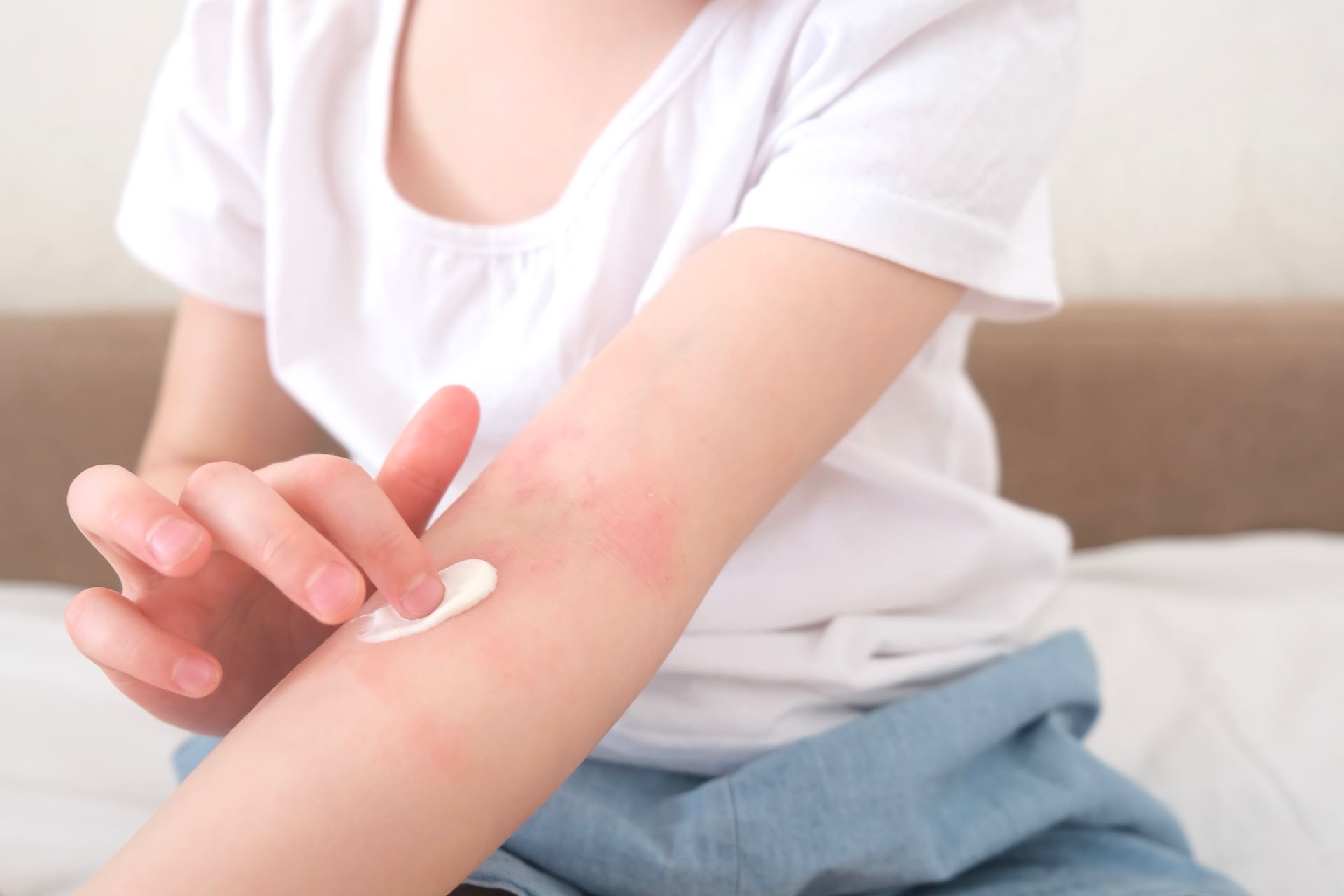
Eczema, also called atopic dermatitis, is a common skin condition that causes inflamed, scaly patches on the skin and can lead to skin infections.
Eczema usually starts in the first year of age, and for many children it goes away by the time they reach their teenage years. However, some people have eczema all their lives. The symptoms can also come and go. Eczema is more common in people who have other allergic-type symptoms including asthma or hayfever, or those with family members with these conditions. It isn’t contagious.
There is no cure for eczema but it can be managed. The following things can help:
Keep your child’s skin moist and cool by:
using a non-soap based wash or oil and avoiding soap and bubble bath that can dry out the skin
applying a non-perfumed moisturiser to the face and body twice per day
having lukewarm (not hot) baths and showers
avoiding overheating from clothes, blankets and heaters
rinsing off chlorine from swimming pools straight after swimming and applying moisturiser
if needed, using wet dressings to cool, protect and rehydrate the skin
Know and avoid triggers for your child’s eczema which might include:
exposure to allergens such as dust mites or animal fur
food allergies or intolerances
overheating
contact with irritating chemicals including soaps, cleaning products, perfumes
contact with fabrics such as wool and polyester
sitting directly on carpets or grass, or playing in sand
stress
viral or bacterial infections
Treat flare-ups with creams or ointments prescribed by your child’s doctor.
Manage itching by using non-sedating antihistamines, cold compresses for the affected areas and discouraging your child from scratching.
Treat infections, including using antibiotics if prescribed by your child’s doctor.
Your doctor can help you to develop an eczema action plan for your child, which is a personal guide outlining now to manage your child’s eczema and prevent flare-ups. You can download an action plan template to take to your doctor from the Australasian Society of Clinical Immunology and Allergy (ASCIA) at https://www.allergy.org.au/patients/skin-allergy/eczema-action-plan
References:
Leins L, Orchard D. Eczema management in school-aged children. Aust Fam Physician. 2017 Dec;46(12):896-899. PMID: 29464225.
https://www.allergy.org.au/patients/skin-allergy/eczema
https://raisingchildren.net.au/guides/a-z-health-reference/eczema
https://www.healthdirect.gov.au/eczema