
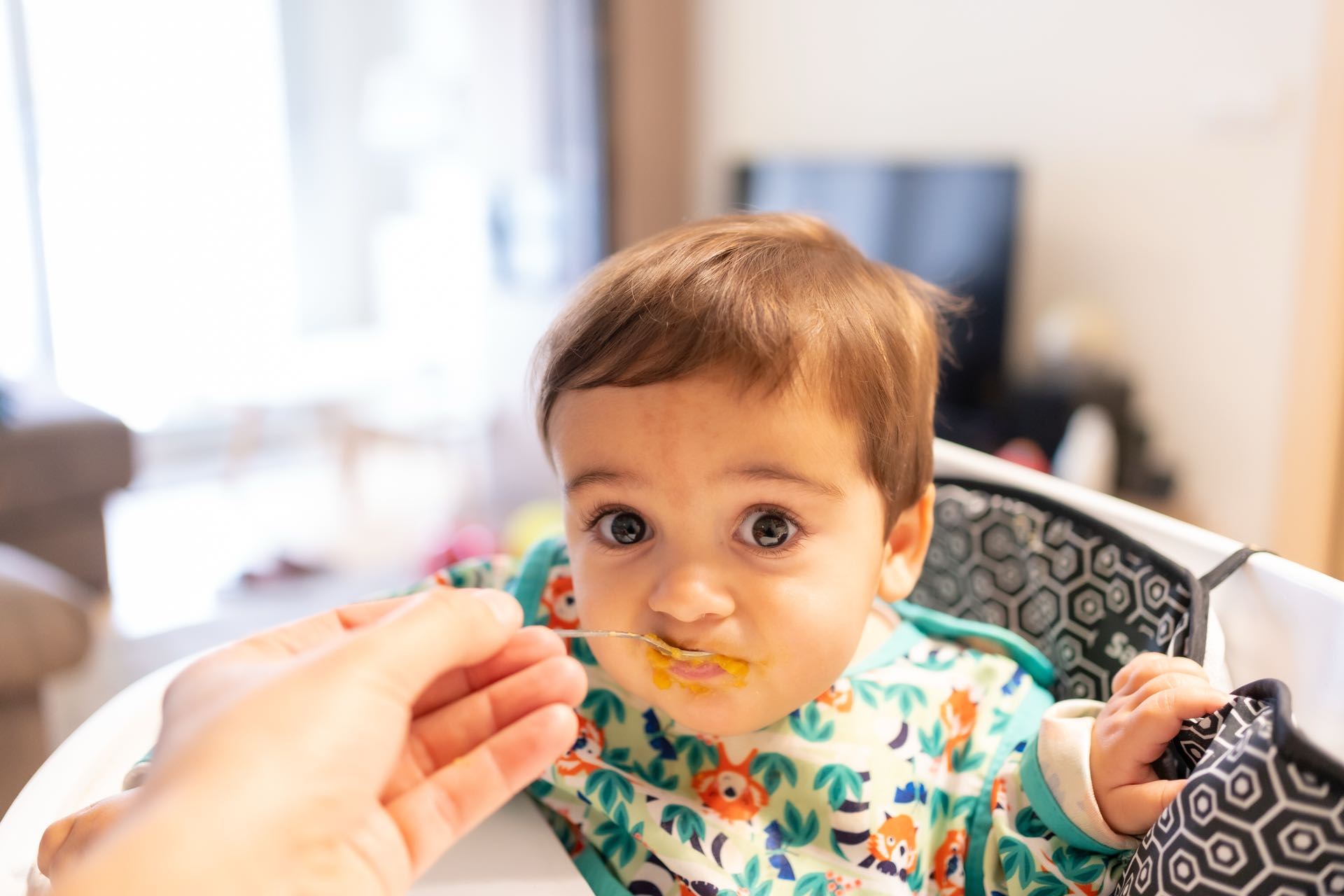
Whether your baby is breastfed or has infant formula, by the age of six months, they need to start on solid foods to provide iron and other nutrients for growth and development. It is currently recommended that solids are introduced at around 6 months, but not before 4 months of age.
Signs that your baby is ready to start solids include:
Being able to sit upright in a highchair with their head and neck unsupported
Showing an interest in the food you are eating and/or reaching out for your food
Opening their mouth if you offer them food
Appearing hungry after breast or bottle feeding
There is no particular order in which you should introduce foods. However, it is important that you include iron-rich foods, and that the foods are an appropriate texture. Start with pureed foods that are smooth and easy to swallow and gradually move to thicker textures, soft lumps and then chopped food and finger foods. By 12 months your child should be able to eat healthy family meals, although caution always needs to be taken with foods that are a choking risk.
Options to start with include:
Iron fortified baby cereals
Pureed or minced meat, poultry and fish
Mashed tofu or legumes (lentils, chickpeas, dried beans)
Cooked and mashed egg
Cooked vegetables
Stewed or mashed fruit
Grains and cereals, including oats, rice, pasta and breads
Dairy foods, such as unsweetened full fat yoghurt and cheese (however cow’s milk should not be given as a drink until after 12 months of age)
Foods to avoid include those that could increase the risk of choking (e.g. whole nuts, popcorn, hard fruits and vegetables such as raw apple and carrots, and whole grapes), raw or runny eggs, honey, sweetened drinks, fruit juices, caffeinated drinks, reduced fat or unpasturised dairy products and plant-based milks including rice, oat, nut or coconut milks. It is also important that food for your baby is cooked and stored safely to reduce the risk of food-borne illness.
Foods which might cause allergies (including nuts, fish, shellfish, wheat, cow’s milk, soy, sesame and egg) should be introduced before 12 months of age as this can reduce the risk of your baby developing an allergy to these foods. However, nuts and seeds should be given as nut or seed butters (not whole), eggs should be well-cooked and cow’s milk or soy milk should only be used in cooking and not given as a main drink until after 12 months of age. More information on introducing these foods can be found at Australasian Society of Clinical Immunology and Allergy (ASCIA) website: https://www.allergy.org.au/patients/allergy-prevention/ascia-how-to-introduce-solid-foods-to-babies If there is a family history of food allergies, seek advice from your GP, paediatrician or dietitian before starting solids.
Breastfeeding or bottle feeding should be continued while introducing solids, until at least 12 months of age. Breastmilk or formula is an important source of nutrition in the first year of life so it is important that solid foods don’t replace this.
For more information:
Visit https://www.pregnancybirthbaby.org.au/introducing-solid-food
References:
https://www1.health.gov.au/internet/publications/publishing.nsf/Content/gug-director-toc~gug-solids
https://www.pregnancybirthbaby.org.au/introducing-solid-food
https://raisingchildren.net.au/babies/breastfeeding-bottle-feeding-solids/solids-drinks/introducing-solids
https://www.allergy.org.au/patients/allergy-prevention/ascia-how-to-introduce-solid-foods-to-babies
References:
https://www.pregnancybirthbaby.org.au/introducing-solid-food
https://www.breastfeeding.asn.au/bf-info/weaning-and-introducing-solids/solidsconfusion
https://www1.health.gov.au/internet/publications/publishing.nsf/Content/gug-director-toc~gug-solids
https://www.allergy.org.au/patients/allergy-prevention/ascia-how-to-introduce-solid-foods-to-babies