
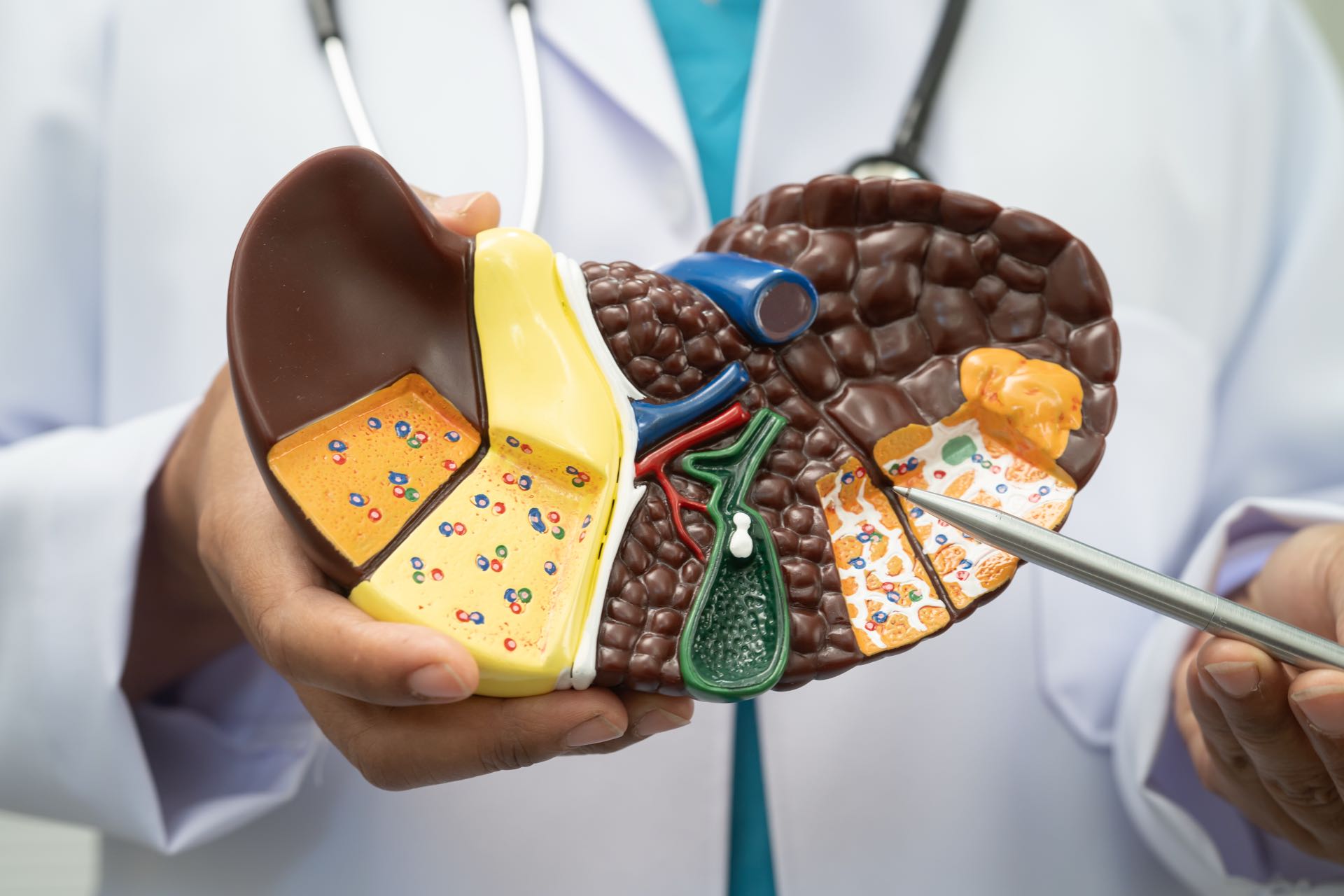
Fatty liver disease the build-up of fat in the liver cells. While excess alcohol intake is a major cause, it is being seen increasingly in those who don’t drink to excess and is referred to as non-alcoholic fatty liver disease, or NAFLD for short.
NAFLD describes the spectrum of fatty liver disease from a simple fatty liver through to severe liver damage.
The first stage is a fatty liver, also called steatosis, where excess fat is stored in the liver but doesn’t cause any significant damage
The second stage is known as non-alcoholic steatohepatitis, or NASH, where the excess fat causes inflammation (known as hepatitis) and can start to damage the liver cells and cause scarring, preventing the liver from working at its best
The final stage is cirrhosis which occurs when there is significant scarring and damage to the liver, and can lead to liver failure
The exact cause of NAFLD, and who will progress from having a fatty liver to more severe forms the disease is unclear. However, people who carry excess weight, particularly around the middle, those with type 2 diabetes and/or metabolic syndrome, and people with high triglycerides (blood fats) are at higher risk. Other causes of fatty liver include excess alcohol intake, certain medications, malnutrition and exposure to certain environmental toxins and chemicals.
A fatty liver doesn’t usually cause any symptoms on its own, so most people aren’t aware that they have it. It is usually diagnosed when blood tests show abnormal liver function tests or may be seen on an ultrasound. The only way to get a definite diagnosis is by having a liver biopsy but this isn’t always necessary as other tests can give your doctor enough information to suggest that something needs to be done. If left untreated it could progress to more serious liver damage. At this stage symptoms may include fatigue, abdominal pain and weight loss.
Whether you have fatty liver disease or want to avoid it, there are many things you can do to protect your liver:
Lose weight, if you are carrying excess weight. But avoid rapid weight loss, which can sometimes contribute to fatty liver disease.
Eat a healthy, balanced diet.
Exercise regularly and try to be more active throughout your day.
Avoid or limit alcohol, particularly in excess
If you have diabetes, try to keep your blood glucose levels in your target range
Lower triglyceride levels by eating a healthy diet, exercising regularly and taking medication when prescribed by your doctor
Check your medications – some medications, both prescription and over-the-counter (including vitamin, mineral and herbal supplements), can affect your liver so always check with your doctor before taking any new medication and follow the directions.
Protect your liver by avoiding alcohol, drugs, smoking and exposure to toxic chemicals, which can include some household chemicals
To find out more about fatty liver, visit https://www.healthdirect.gov.au/fatty-liver or download a free information sheet at https://www.gesa.org.au/resources/patients/fatty-liver-disease/
References:
Farrell GC, Larter CZ. Nonalcoholic fatty liver disease: from steatosis to cirrhosis. Hepatology. 2006 Feb;43(2 Suppl 1):S99-S112. doi: 10.1002/hep.20973. PMID: 16447287.
Clark JM. The epidemiology of nonalcoholic fatty liver disease in adults. J Clin Gastroenterol. 2006 Mar;40 Suppl 1:S5-10. doi: 10.1097/01.mcg.0000168638.84840.ff. PMID: 16540768.
Grattagliano I, Portincasa P, Palmieri VO, Palasciano G. Managing nonalcoholic fatty liver disease: recommendations for family physicians. Can Fam Physician. 2007 May;53(5):857-63. PMID: 17872748; PMCID: PMC1949172.
Mendler. Fatty Liver: Nonalcoholic Fatty Liver Disease (NAFLD)and Nonalcoholic Steatohepatitis (NASH). http://www.medicinenet.com/fatty_liver/article.htm
https://www.gesa.org.au/resources/patients/fatty-liver-disease/